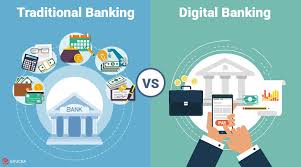
For decades, the phrase “going to the bank” carried a specific sensory weight. It meant heavy glass doors, the muffled hush of a high-ceilinged lobby, the scent of crisp paper, and the rhythmic “thwack” of a rubber stamp. The traditional bank was a fortress of marble and mahogany—a physical manifestation of stability.
But today, the fortress is being dismantled, brick by byte.
As we move deeper into the decade, a provocative question hangs over the financial district: Is the traditional bank becoming a digital relic?
The Rise of the “Invisible Bank”
In the past ten years, a new breed of financial entity has emerged: the Neo-bank. Companies like Monzo, Revolut, and Chime didn’t build vaults; they built code. These challengers recognized that for the modern consumer, “friction” is a greater sin than “lack of tradition.”
To a generation raised on the instant gratification of DoorDash and Netflix, the idea of waiting three business days for a transfer or god forbid printing and signing a physical document is an evolutionary insult. Neo-banks offer sleek interfaces, instant spending notifications, and the ability to freeze a lost card with a thumb-tap. They aren’t just places to store money; they are lifestyle apps that gamify savings and automate budgeting.
In this landscape, the traditional bank looks like an ocean liner trying to race a fleet of jet skis.
The Moat of Trust
If speed and UX were the only metrics, traditional banks would already be extinct. Yet, they endure. Why? Because while we trust algorithms to find us music, we still hesitate to trust them with our life savings.
Traditional banks possess a “Moat of Trust” built over centuries. When the economy wobbles or a fraudulent transaction appears, there is a primal human desire to speak to a person not a chatbot named “Finley.” For complex life events getting a first mortgage, navigating an inheritance, or restructuring a business loan—the nuance of human judgment still outweighs the efficiency of an automated script.
Furthermore, “Big Finance” has a weapon that startups often lack: deep pockets. J.P. Morgan Chase spends over $12 billion annually on technology. Traditional banks are no longer just sitting behind mahogany desks; they are cannibalizing the innovations of fintech. They are closing quiet branches and pouring that overhead into their own apps, effectively becoming tech companies with a legacy backup.
The “Everything Everywhere” Era
The reality of the future isn’t a total disappearance of traditional banks, but rather their de-materialization.
Banking is shifting from a destination we visit to a background utility that exists wherever we are. This is “Embedded Finance.” You don’t go to a bank to get a loan for a car; the loan is embedded in the car manufacturer’s app. You don’t go to a bank to pay a friend; the payment is embedded in your messaging app.
In this scenario, the “bank” becomes the plumbing—essential but invisible. The traditional banks that survive will be those that accept their role as the secure, regulated infrastructure supporting a thousands-strong ecosystem of digital interfaces.
The Verdict: Evolution, Not Extinction
The traditional bank isn’t becoming obsolete; the traditional experience of banking is.
We are witnessing the end of the bank as a physical landmark and the birth of the bank as a digital heartbeat. The marble pillars are being traded for encryption keys, and the teller’s window is being replaced by a liquid crystal display.
The institutions that will thrive are those that can marry the “New World” of frictionless technology with the “Old World” of institutional security. For the consumer, this is a win. We no longer have to choose between a bank that is safe and a bank that is convenient.
The corner bank may be fading, but the utility it provided is more present in our lives than ever before—pulsing in our pockets, waiting for a swipe. The vault isn’t gone; it’s just turned into light.
The Great De-Materialization: Is the Corner Bank Fading into the Cloud?
For decades, the phrase “going to the bank” carried a specific sensory weight. It meant heavy glass doors, the muffled hush of a high-ceilinged lobby, the scent of crisp paper, and the rhythmic “thwack” of a rubber stamp. The traditional bank was a fortress of marble and mahogany—a physical manifestation of stability.
But today, the fortress is being dismantled, brick by byte.
As we move deeper into the decade, a provocative question hangs over the financial district: Is the traditional bank becoming a digital relic?
The Rise of the “Invisible Bank”
In the past ten years, a new breed of financial entity has emerged: the Neo-bank. Companies like Monzo, Revolut, and Chime didn’t build vaults; they built code. These challengers recognized that for the modern consumer, “friction” is a greater sin than “lack of tradition.”
To a generation raised on the instant gratification of DoorDash and Netflix, the idea of waiting three business days for a transfer or—god forbid—printing and signing a physical document is an evolutionary insult. Neo-banks offer sleek interfaces, instant spending notifications, and the ability to freeze a lost card with a thumb-tap. They aren’t just places to store money; they are lifestyle apps that gamify savings and automate budgeting.
In this landscape, the traditional bank looks like an ocean liner trying to race a fleet of jet skis.
The Moat of Trust
If speed and UX were the only metrics, traditional banks would already be extinct. Yet, they endure. Why? Because while we trust algorithms to find us music, we still hesitate to trust them with our life savings.
Traditional banks possess a “Moat of Trust” built over centuries. When the economy wobbles or a fraudulent transaction appears, there is a primal human desire to speak to a person—not a chatbot named “Finley.” For complex life events—getting a first mortgage, navigating an inheritance, or restructuring a business loan—the nuance of human judgment still outweighs the efficiency of an automated script.
Furthermore, “Big Finance” has a weapon that startups often lack: deep pockets. J.P. Morgan Chase spends over $12 billion annually on technology. Traditional banks are no longer just sitting behind mahogany desks; they are cannibalizing the innovations of fintech. They are closing quiet branches and pouring that overhead into their own apps, effectively becoming tech companies with a legacy backup.
The “Everything Everywhere” Era
The reality of the future isn’t a total disappearance of traditional banks, but rather their de-materialization.
Banking is shifting from a destination we visit to a background utility that exists wherever we are. This is “Embedded Finance.” You don’t go to a bank to get a loan for a car; the loan is embedded in the car manufacturer’s app. You don’t go to a bank to pay a friend; the payment is embedded in your messaging app.
In this scenario, the “bank” becomes the plumbing—essential but invisible. The traditional banks that survive will be those that accept their role as the secure, regulated infrastructure supporting a thousands-strong ecosystem of digital interfaces.
The Verdict: Evolution, Not Extinction
The traditional bank isn’t becoming obsolete; the traditional experience of banking is.
We are witnessing the end of the bank as a physical landmark and the birth of the bank as a digital heartbeat. The marble pillars are being traded for encryption keys, and the teller’s window is being replaced by a liquid crystal display.
The institutions that will thrive are those that can marry the “New World” of frictionless technology with the “Old World” of institutional security. For the consumer, this is a win. We no longer have to choose between a bank that is safe and a bank that is convenient.
The corner bank may be fading, but the utility it provided is more present in our lives than ever before—pulsing in our pockets, waiting for a swipe. The vault isn’t gone; it’s just turned into light.